

For instance, medical facilities and law offices are often required to carry malpractice insurance to cover their staff. SG&A expenses as a percent of revenue are generally high for healthcare and telecommunications businesses however moderately low for real estate and energy. “If you want to keep your pre-tax profit at 20%, and your Mental Health Billing cost of sales is too high, the first place you’re going to have to cut is SG&A,” Barros says. Barros says companies with high COGS must be “lean and mean,’’ in order to keep pre-tax profit margins in the 10% range. If you want to keep your pre-tax profit at 20%, and your cost of sales is too high, the first place you’re going to have to cut is SG&A. Below are extracts of the income statements for Coca-Cola and Pepsi from their three months end quarterly 10-Q reports for 2019.
Salaries and wages

The SG&A margin describes the relationship between a company’s selling, general and administrative costs and the amount of revenue generated in the corresponding period. While many businesses succeed in cutting SG&A costs, some face challenges that offer insightful lessons. One manufacturing company attempted to reduce costs by slashing its marketing budget drastically. However, this led to a decline in sales and brand visibility, ultimately harming their revenue. This scenario underscores the importance net sales of SG&A in driving sales and maintaining customer engagement.

How should I control my SG&A expenses?
- Stasz (2003) study showed that gross margin could be improved by integration strategy methodology.
- Ensuring that all staff and stakeholders are informed about the changes will foster a cost-saving culture within your organization.
- Both SG&A and R&D are necessary for business operations, but R&D is viewed as an investment in future growth rather than a current operational cost.
- The SG&A formula is calculated by adding up all the expenses incurred by a business that are not directly related to the production of goods or services.
- For example, if your cost of goods sold represents $700 for every $1,000 in revenues, then your gross profit margin will be $300 or 30% of revenues.
We will now see some live examples of companies selling General & Administrative expenses. But these expenses are also important to carry on a day to day activities. Therefore a balanced amount should be spent keeping in mind the structure of the company (more fixed costs than variable costs and vice versa). For example, tech companies may have lower sg&a definition COGS but higher SG&A expenses due to higher marketing, research, and administrative costs. In contrast, manufacturing industries may have higher COGS and lower SG&A. SG&A provides a comprehensive look at a company’s overhead and administrative efficiency.
- Businesses might also pay for employee training sessions or continuing education.
- To gain insight into just how essential these expenses are, consider a simple scenario.
- These costs are essential for day-to-day operations and can include rent, utilities, office supplies, insurance, employee salaries and marketing expenditure.
- SG&A expenses are often the second largest category of business costs after COGS.
- Apple’s SG&A expenses were exactly the same after rounding in both quarters, suggesting consistent operational efficiency.
- Please note that these percentages are rough estimates and can vary from company to company within each industry.
- All these expenses are essential for running a business but not directly tied to production.
Look up another Financial Concept:
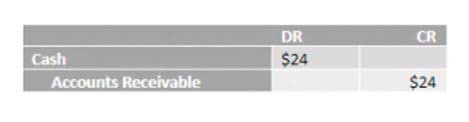
Consulting fees, payroll, and payroll taxes are often substantial components of SG&A, representing the cost of essential support and personnel needed to carry out business operations. The decision-making process around these expenses is vital, as companies must balance hiring and consulting services against the potential benefits they bring. The chosen accounting method can significantly impact how SG&A expenses are reported and perceived. Selling, General, and Administrative (SG&A) expenses are a critical component of a company’s financial health and operational efficiency. The SG&A formula is calculated by adding up all the expenses incurred by a business that are not directly related to the production of goods or services.
SG&A Margin
Administrative salaries cover compensation for executive staff, human resources, accounting, and legal departments. Office rent and utilities, such as electricity and internet services for corporate offices, are also included. The costs of general office supplies, like stationery and printing materials, fall under this category. SG&A expenses are an important financial metric impacting a company’s profitability and efficiency. The report typically includes information about a company’s selling, general, and administrative expenses and is used to track the company’s spending on overhead costs. Administrative expenses are a subset of Selling, General, and Administrative (SG&A) expenses.